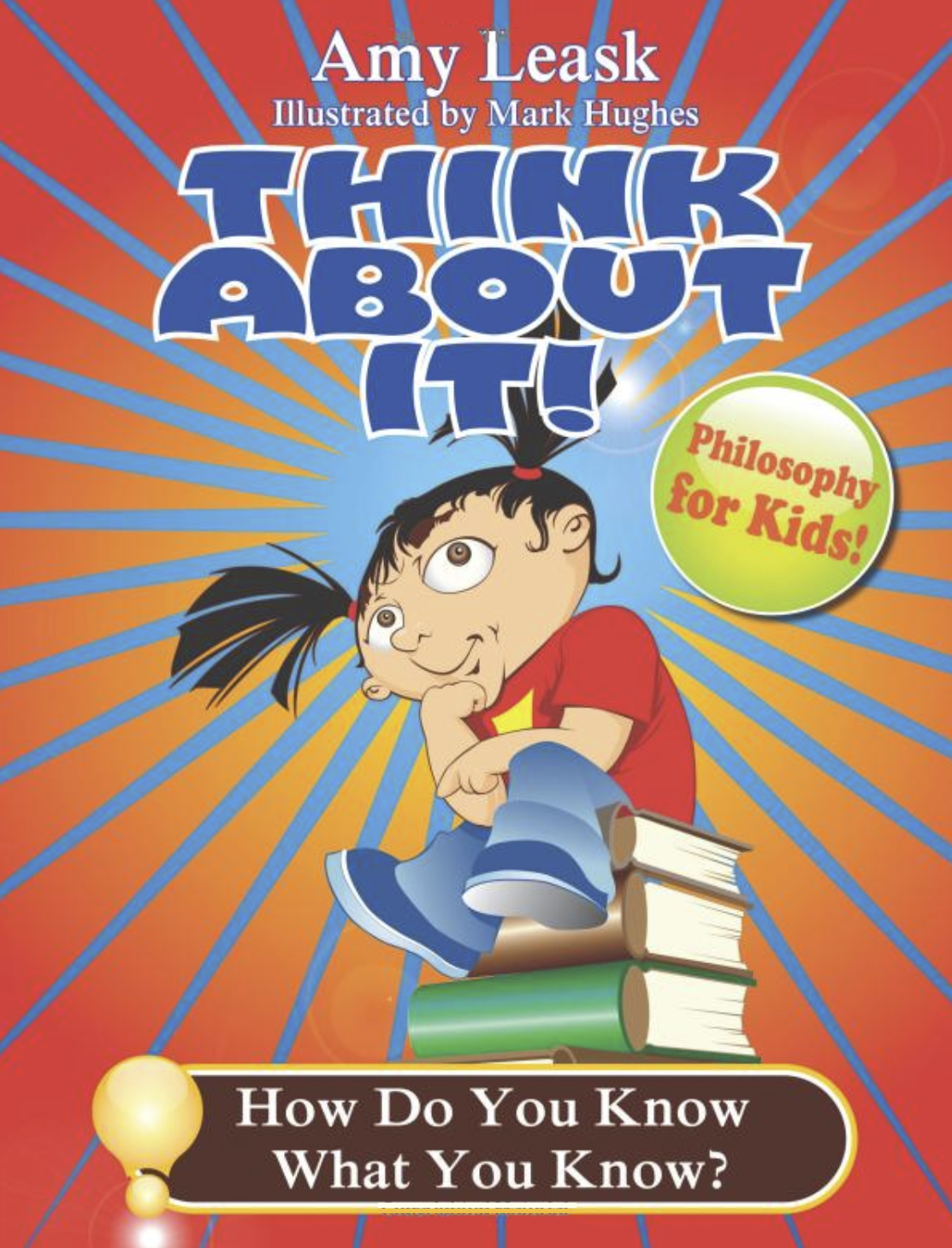


In this forty-sixth episode of the Philosophy Bakes Bread radio show and podcast, we interview Amy Leask of Red T Media and Enable Education on the subject of “Philosophy at Home: Re-envisioning Philosophy’s Reach Beyond the Academy.” Red T Media is a publisher and Web and mobile application provider for parents who want to introduce their kids to Philosophy. Among Red T Media’s most successful books is Amy’s Think About It! Series, including their most popular edition called How Do You Know What You Know? The series is subtitled “Philosophy for Kids!”

Amy is an educator, writer, and children’s digital media producer from Milton, Ontario, in Canada. She is the founder of Red T Media, and co-founder of Enable Education. Enable Education is a provider of online educational content, mobile apps, as well as print and audio-visual educational material, in areas including Science, Technology, Engineering, and Math, the so-called “STEM” fields from pre-school to post-secondary education. They are also industry leaders, keynote speakers, TEDx Talkers, and “edutech award winners.”
Listen for our “You Tell Me!” questions and for some jokes in one of our concluding segments, called “Philosophunnies.” Reach out to us on Facebook @PhilosophyBakesBread and on Twitter @PhilosophyBB; email us at philosophybakesbread@gmail.com; or call and record a voicemail that we play on the show, at 859.257.1849. Philosophy Bakes Bread is a production of the Society of Philosophers in America (SOPHIA). Check us out online at PhilosophyBakesBread.com and check out SOPHIA at PhilosophersInAmerica.com.
In this episode, we mentioned another episode (Ep37), with Nick Caltagiarone, who talked about teaching philosophy in high school. He was the one who mentioned the line, which he attributed to John Searle, about the importance of teaching young people how not to be taken in by nonsense.
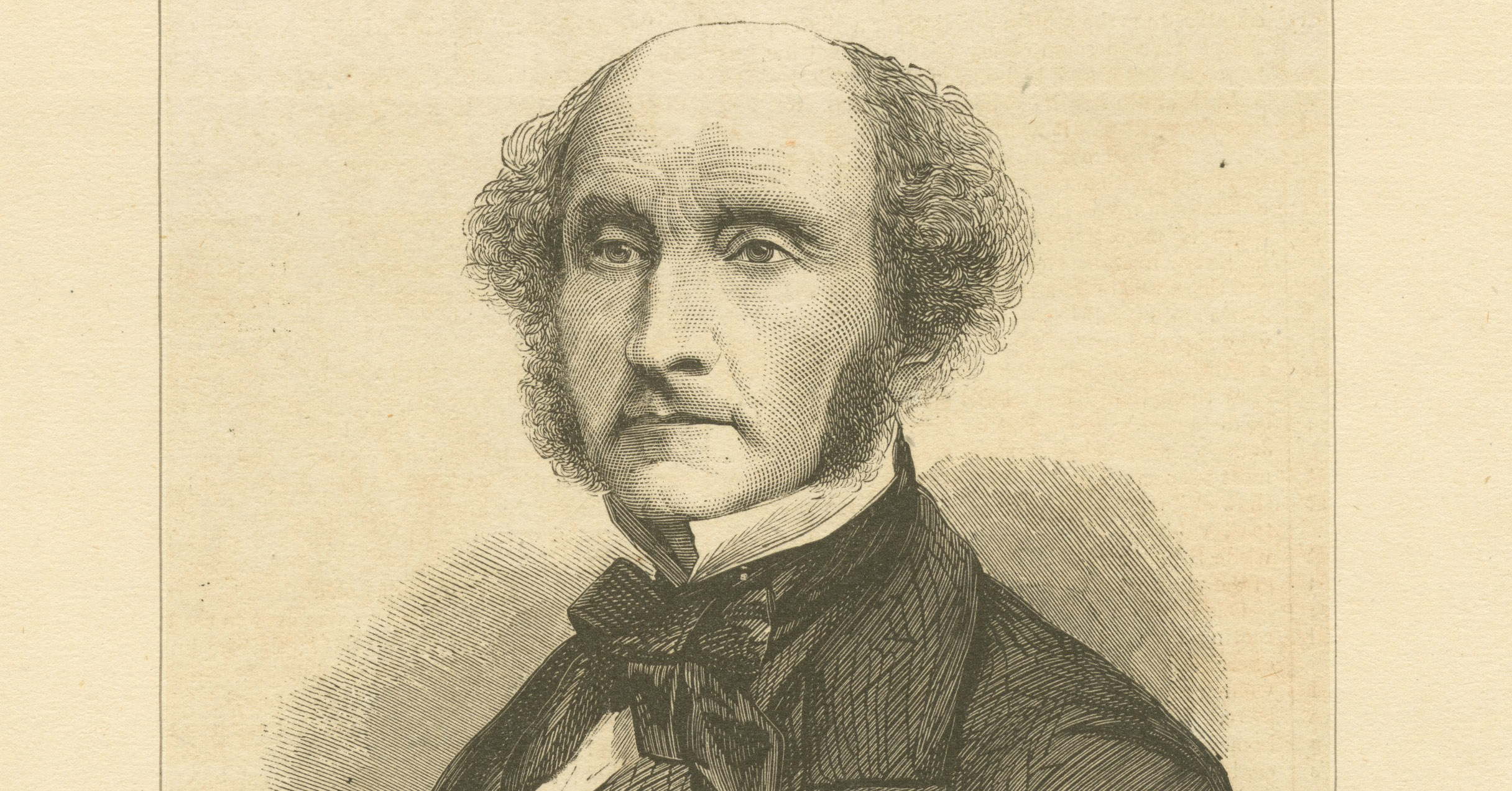
I consider myself a Millian—that is, a follower of the Victorian philosopher of morals, social life, and politics (and much else besides) John Stuart Mill (1806–73). Usually I’m a fairly confident Millian; some might even say smug. Mill’s work has, like the work of all important philosophers, been subjected to numerous serious objections. But I believe that many of these objections have already been adequately answered and that the prospects of our finding satisfactory answers to the rest are at least as good as the prospects of our finding satisfactory answers to the equally serious objections that have been pressed against the work of Aristotle, Kant, etc. Still, today my confidence is beginning to show some cracks. Recent events in the U.S. are casting serious doubts on one of the most celebrated and influential elements of Mill’s thought, his defense of the freedom of expression.
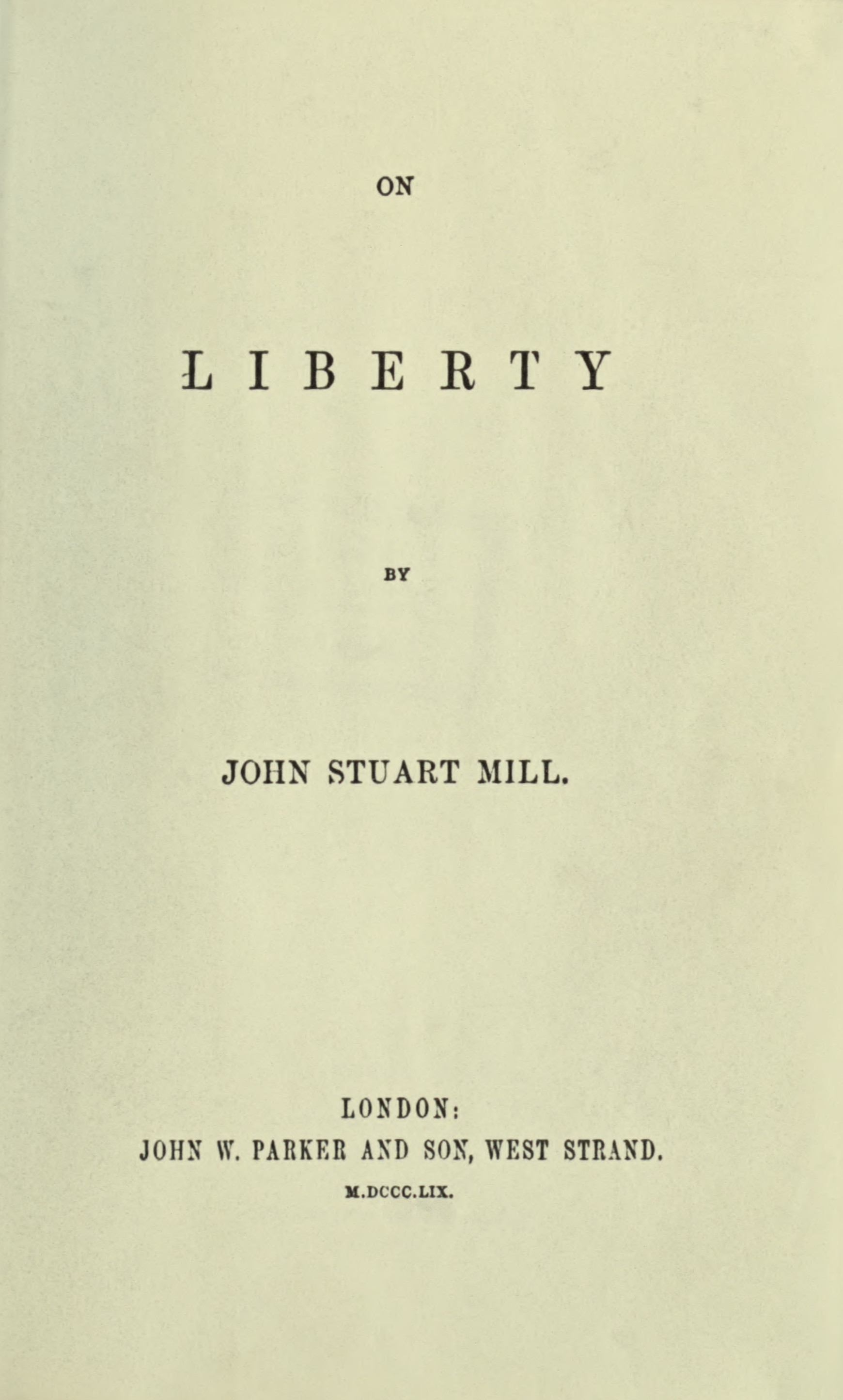
Mill’s defense of the liberties of speech and the press appears in the second chapter of his 1859 essay On Liberty.[1] His case is grounded not on something like a “natural” right but rather on the social benefits of freedom of expression. This doesn’t mean that Mill believes that every use that people make of this freedom—every published article, every sign, every utterance—makes the world better off. But what he does believe is that there is great value in a vigorous marketplace of ideas, for which thoroughgoing freedom of expression is a prerequisite. According to Mill, the marketplace of ideas is a powerful engine not only for correcting intellectual errors and discovering truths of all sorts but also for motivating individuals who hold true ethical beliefs to base their lives on these beliefs. And the greater the extent to which people do this, Mill maintains (albeit without much argument), the happier that human life will be. This, for Mill, is the ultimate standard for moral rightness.[2]
Mill’s case for freedom of expression unfolds in three stages; he asks first what society loses when it suppresses the expression of true ideas, next what it loses when it suppresses false ideas, and finally what it loses when it suppresses ideas that are both true and false in parts. I’m primarily interested in his answer to the second of these questions. It might seem surprising that Mill would believe that society loses anything of value when it censors ideas that genuinely are entirely false, as opposed to ideas that are thought to be entirely false but are in fact at least partly true. Yet he takes there to be several sources of loss in such cases.
One way in which society loses when it suppresses false ideas is that when these ideas cannot receive “any fair and thorough discussion … such of them as could not stand such a discussion, though they may be prevented from spreading, do not disappear.”[3] In other words, when false ideas cannot be brought into the light and openly confronted in fair and free debate, because defending them or perhaps even discussing them is proscribed, they fester. One of the benefits that Mill therefore claims for the liberties of speech and the press is that they enable us to (eventually) extinguish false doctrines, in the sense of bringing it about that they aren’t believed.
A second way in which society loses from restricting the expression of false ideas concerns how ethical beliefs are held. Suppose that society has made it impossible to challenge some widely accepted moral doctrine, so that contrary doctrines cannot be “fully, frequently, and fearlessly discussed.” In this case, Mill says, even if the widely accepted doctrine is completely correct it will be “held as a dead dogma, not a living truth.”[4] When we know that we’re likely at some point to be called upon to defend our creed against an opponent, he writes, we’re more likely both to ensure that we understand the considerations that favor that creed and to give the creed an important place in our thoughts and actions. On the other hand, “as soon as there is no enemy in the field,” we tend to lapse into giving our beliefs little more than lip service.[5] As evidence Mill points to the many “Sunday-morning” Christians in countries in which Christianity is the dominant faith. If such Christians are animated by anything in their religion through the rest of the week, he maintains, it is only by those parts of it that are distinctive to their particular sect and that they might need to defend against other sectarians. Thus another respect in which the liberties of speech and the press are beneficial is that they make it more likely that people who hold true moral doctrines will be “penetrated” by them, in the sense of holding them as more than dead dogmas.
U.S. Department of Defense photos.
There is some tension between these two claims of Mill’s. After all, if false moral doctrines are extinguished, then no one will need to worry about debating their adherents. It therefore appears that freedom of expression can at most yield only one of these benefits with respect to any particular false moral doctrine, not both. The tension between these claims doesn’t rise to the level of contradiction, however. It can be true both that the long-run tendency of protecting the marketplace of ideas is to extinguish false views and that until a particular false ethical view is extinguished the fact that some people hold it will give those who hold the true view, or at least a truer one, a livelier appreciation of their own commitments. This is Mill’s stance; he observes that while it’s desirable for false moral doctrines to be extinguished, when this happens something of value is lost that society ought to try to replace to the extent possible. For instance, teachers may need to learn to defend certain false doctrines forcefully, to approximate for students the experience of debating someone who holds them.[6]
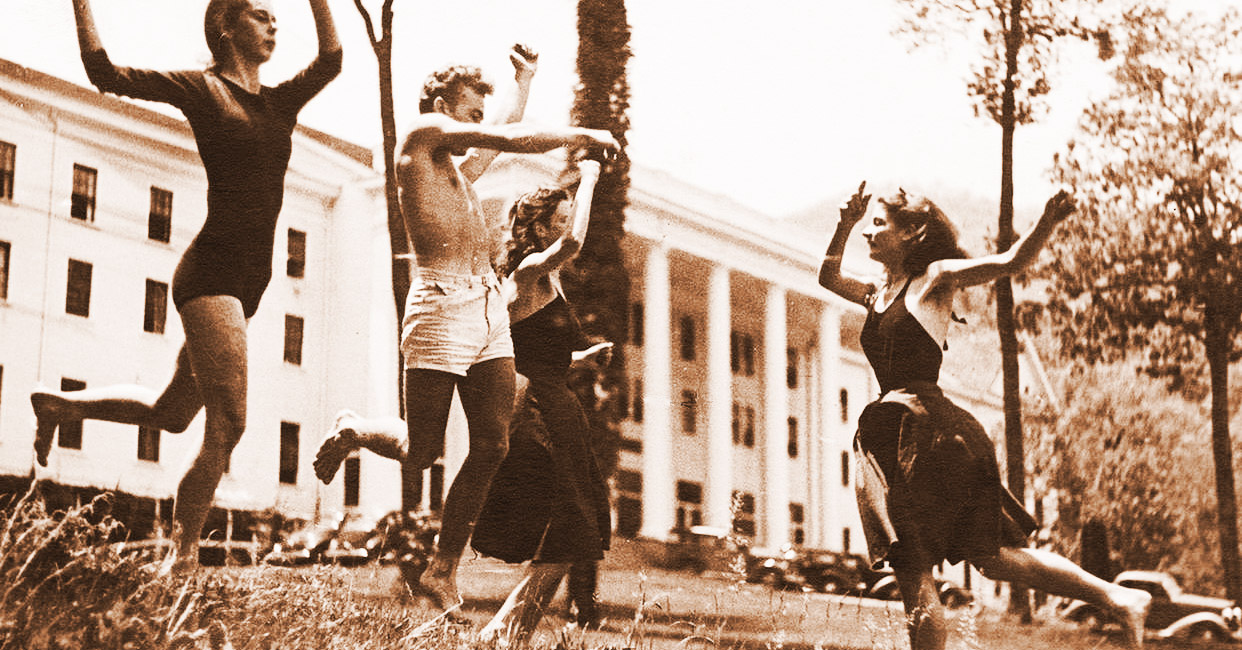
In this forty-fifth episode of the Philosophy Bakes Bread radio show and podcast, we interview Dr. Brian Butler of the University of North Carolina Asheville. We talk with Brian about two applications of the idea known as “democratic experimentalism” that have been at the heart of his work. One application concerns Constitutional law. The other involves the history of Black Mountain College, an experiment in democratic experimentalism applied to higher education, where art was central to education in the college.
Dr. Butler is the Thomas Howerton Distinguished Professor of Humanities and Professor of Philosophy at the UNC Asheville. He recently published his book, The Democratic Constitution: Experimentalism and Interpretation, with the University of Chicago Press. He was also the Project Director in 2010 for a large grant from the National Endowment for the Humanities’s “We the People” Grant program, which focused on “Black Mountain College: An Artistic and Educational Legacy.” Black Mountain College was founded in 1933 in North Carolina as was an experimental college with a central role for art in liberal arts education. John Dewey’s philosophy of education was a fundamental inspiration for the college.
Listen for our “You Tell Me!” questions and for some jokes in one of our concluding segments, called “Philosophunnies.” Reach out to us on Facebook @PhilosophyBakesBread and on Twitter @PhilosophyBB; email us at philosophybakesbread@gmail.com; or call and record a voicemail that we play on the show, at 859.257.1849. Philosophy Bakes Bread is a production of the Society of Philosophers in America (SOPHIA). Check us out online at PhilosophyBakesBread.com and check out SOPHIA at PhilosophersInAmerica.com.
From the Meeting Program for the 2018 Eastern Division Meeting of the American Philosophical Association, which runs from January 3rd through the 6th of 2018:
The Society of Philosophers in America, SOPHIA (G6E in the group meeting portion of the program)
Topic:
Establishing Conditions for Community Building and Philosophical Dialogue
Chair:
Daniel Brunson (Morgan State University)
Speakers:
Jacquelyn Ann Kegley (California State University, Bakersfield)
“Establishing Conditions for Community Building and Philosophical Dialogue”
James William Lincoln (University of Kentucky)
“Fellowship: An Epistemological Analysis”
Eric Thomas Weber (University of Kentucky)
“Cosmopolitanism Online: Philosophical Community-Building in the Internet Age”
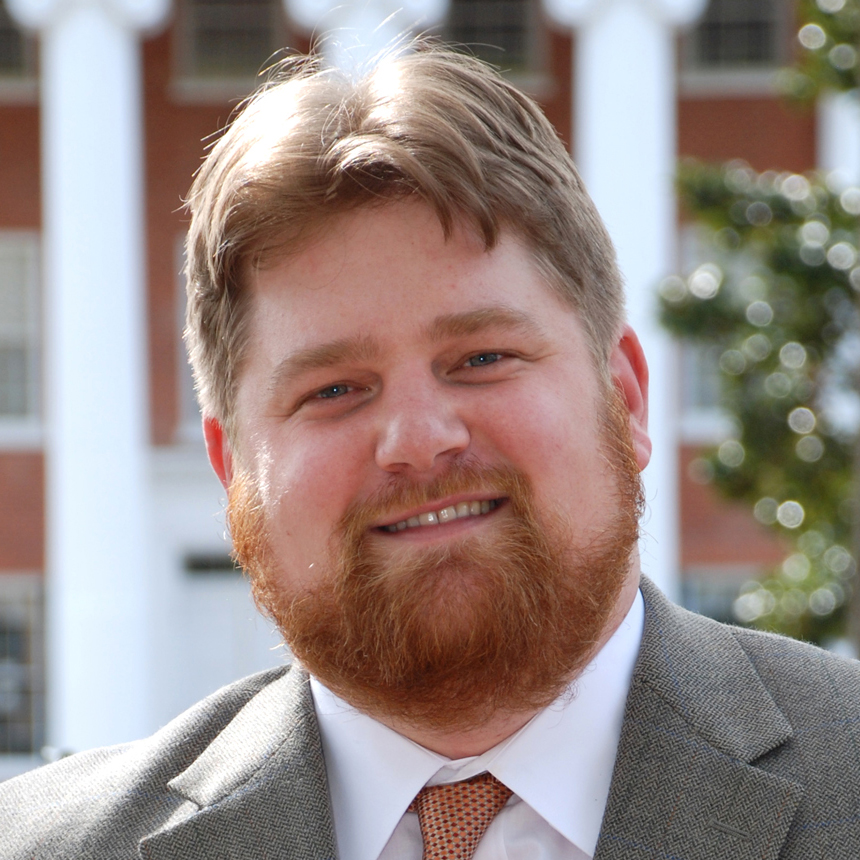
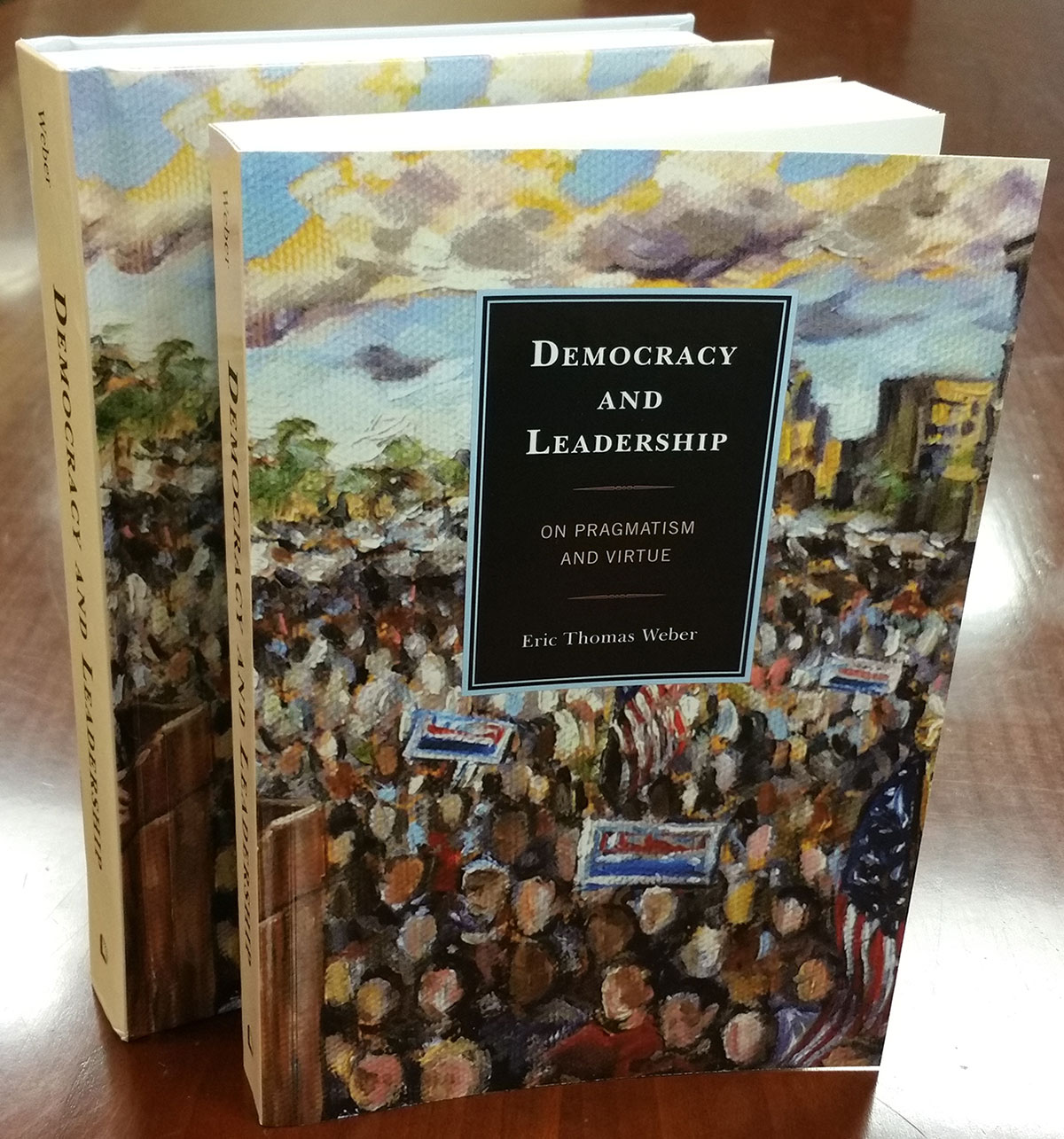
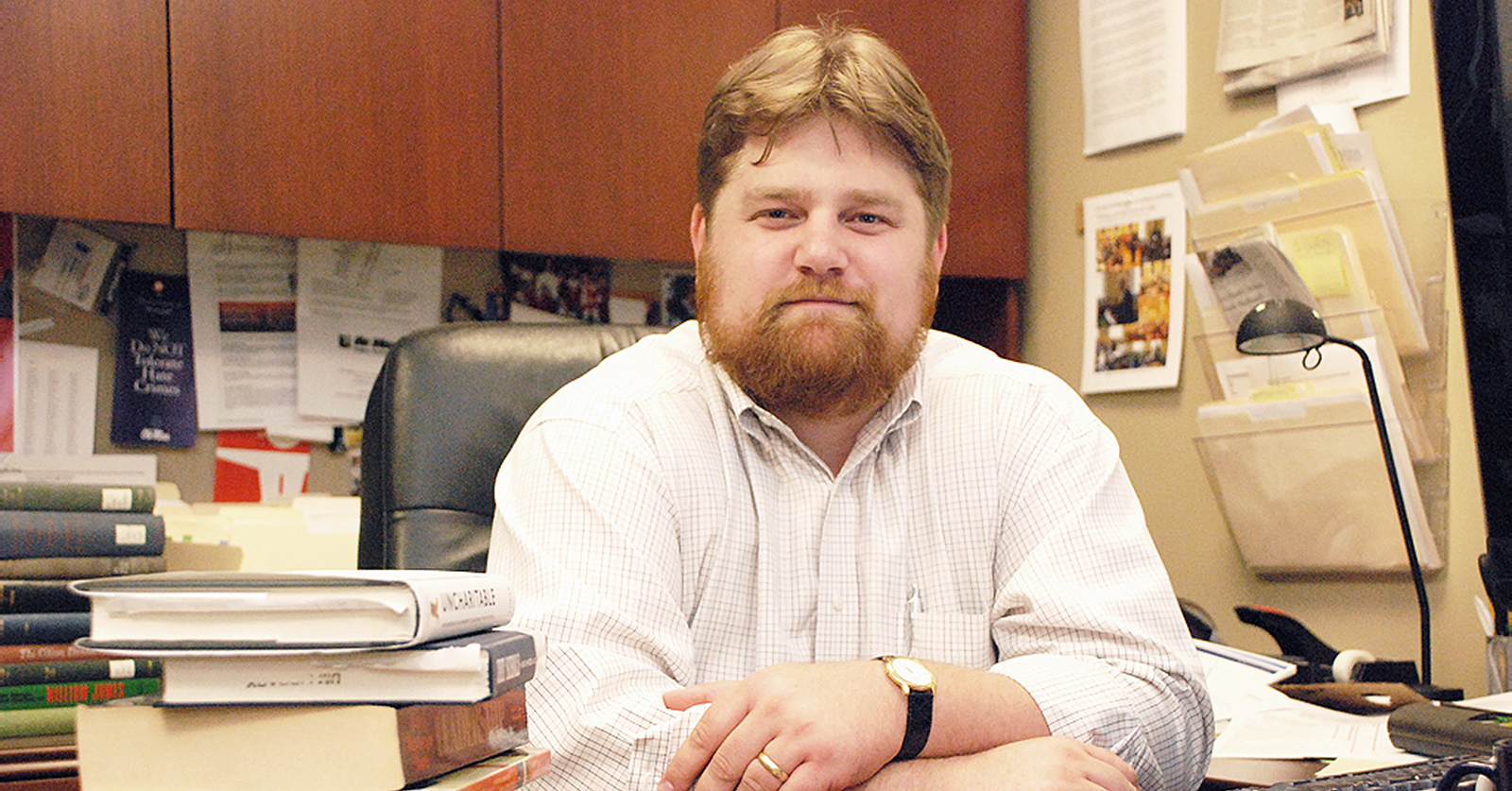
In this forty-fourth episode of the Philosophy Bakes Bread radio show and podcast, Dr. Anthony Cashio decides that “turn-about is fair play.” He had been the guest in the very first episode of the show, and in this episode, he turns the tables and grills co-host Dr. Eric Thomas Weber as the guest for the day. The show focuses on Weber’s 2013 book, Democracy and Leadership, and then relates Weber’s theory of democratic leadership to his work as Executive Director of the Society of Philosophers in America, a.k.a. SOPHIA.
Dr. Weber is the author of four books, including most recently Democracy and Leadership(2013) and Uniting Mississippi (2015). In 2015 he was awarded the Mississippi Humanities Council’s Humanities Scholar Award in their Public Humanities Awards program. At the University of Mississippi, he was associate professor of public policy leadership from 2007 to 2016. In 2016, he moved to the University of Kentucky, where he is visiting associate professor in the philosophy department. In 2017, SOPHIA was awarded the major prize from the APA and the Philosophy Documentation Center for excellence and innovation in philosophy programs.
Listen for our “You Tell Me!” questions and for some jokes in one of our concluding segments, called “Philosophunnies.” Reach out to us on Facebook @PhilosophyBakesBread and on Twitter @PhilosophyBB; email us at philosophybakesbread@gmail.com; or call and record a voicemail that we play on the show, at 859.257.1849. Philosophy Bakes Bread is a production of the Society of Philosophers in America (SOPHIA). Check us out online at PhilosophyBakesBread.com and check out SOPHIA at PhilosophersInAmerica.com.