
| By William Irwin |
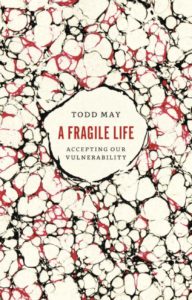
 In A Fragile Life: Accepting our Vulnerability, Todd May asks whether invulnerability is desirable. Identifying Stoicism, Epicureanism, Buddhism, and Taoism as philosophies of invulnerability, May rejects what he says is their ultimate goal. His reasoning is that big things like loss, death, politics, and failure matter too much. He would not want to become invulnerable to their emotional impact.

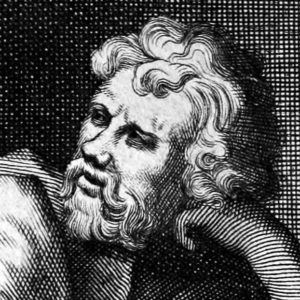
The stoic, Epictetus.
To be clear, the invulnerability May refers to is emotional invulnerability, not physical or actual invulnerability. Even the most accomplished Stoic, for example, is still subject to the occurrence of loss, death, and failure. It is just that the perfect Stoic would no longer be emotionally vulnerable to such occurrences. Rather, such a person would notice these occurrences, account for them, but not be disturbed by them. The perfect Stoic would not lack feeling but would integrate that feeling within a properly ordered self. Granted, there are different conceptions and interpretations of Stoicism, but in general it is a philosophy that counsels self-control, detachment, and acceptance of one’s fate. Likewise, Epicureanism aims at acceptance of a life of simple pleasures taken in moderation, and Taoism aims to go with the flow, the Tao or way.
May finds much to admire and emulate in philosophies of invulnerability. Indeed, when it comes to small matters, May wishes he were more invulnerable. For example, it would be better not to be so disturbed when, due to circumstances beyond control, one runs late for an appointment. Likewise, it would be better to be less upset, or not upset at all, by one’s malfunctioning computer. In the words of Reinhold Niebuhr’s Serenity Prayer, it would be ideal to accept the things that one cannot change—especially the small things.
 For May, though, part of what makes life worth living is emotional investment. If we derive meaning from our emotional investments in people, projects, and our own lives then we must pay the price of emotional vulnerability that comes with their fragility and uncertainty. If I spend my life committed to the cause of free speech, then fittingly I would be devastated if a tyrannical government seized power and deprived the citizenry of that right. As May sees it, a reaction of stoical indifference would be inappropriate and undesirable. Such a reaction might force me to wonder if I had ever really been deeply committed to championing free speech in the first place. Likewise, if I learned that my life was about to be cut short by cancer, a reaction of stoic indifference might throw into doubt how much I ever valued my life and its projects. Perhaps all the more so, a reaction of stoic indifference to the death of one’s child might seem to suggest that one never really loved the child. No, the people and things that make life worth living deserve deep emotional investment such that one is vulnerable. A life worth living is a life of vulnerability.
To a large extent I agree with May’s conclusion. Where I disagree is with his conception of the philosophies of invulnerability and with the desirability of invulnerability as an ultimate goal. May considers philosophies of invulnerability in such a way as to overestimate their potential success. The truth is that the perfect Stoic is a fiction. Also in the realm of fiction we can find the Buddhist, Taoist, and Epicurean who have achieved invulnerability. The philosophies of invulnerability aim at a goal that they never reach. So, contra May, we need to reformulate the question. Should we pursue the trajectory that asymptotically approaches invulnerability without ever reaching it? For myself I answer yes.
 If there were a single pill that I could take one time to achieve emotional invulnerability I would decline the pill. I would not want to become invulnerable immediately, once and for all, even though the invulnerability is still worth wanting. Of course, Stoicism, Buddhism, Taoism, and Epicureanism offer no such pill. Rather, what each offers is a philosophy and a training program for approaching invulnerability. The training takes time; even life-long practitioners do not often claim to have reached the desired outcome. One way to think of the training is in terms of setting an aspirational goal. For example, a runner might set an aspirational goal of running a mile in under five minutes. That goal, that aspiration, might not be realistic but it could still be worth striving towards. Likewise, I could choose to strive for emotional invulnerability. As a middle-aged man who can barely run a mile in eight minutes, a sub-five-minute mile would likely be beyond my reach. Even further beyond my reach would be complete emotional invulnerability. But, in each case, training to reach the goal could itself be transformational, and it could help me to reach desirable levels that are short of the goal. The real value of the goal is in a sense already present in the striving towards it. Even if I never get to the point of running a sub-five-minute mile, I may get to the point of running a six-and-a-half-minute mile, which may help me to lose twenty pounds, improve my cardiovascular health, and finish near the top of my age bracket in the local three-mile race. I might also be the kind of person who is better motivated by grandiose goals than by more modest goals—like those actual achievements that result. Similarly, if I aim at emotional invulnerability as an aspirational goal, I will likely never get there, but the shining example of the perfect Stoic or the perfect Buddhist may motivate me to work harder than would the more modest goal of becoming less easily disturbed by life’s everyday vicissitudes. By following the training program to become the perfect Stoic or the perfect Buddhist, I may as a result reach a state of being undisturbed by traffic jams and malfunctioning computers. I may not reach the state of being undisturbed when my long-term project of protecting free speech crumbles, but I may be able to accept it and move on. I might even be able to accept the premature death of a loved one with a degree of equanimity such that my life is not destroyed by it.

Photo courtesy of Hermann via Pixabay, creative commons license.
Like most people, I enjoy earning rewards. I would much rather make a million dollars by the sweat of my brow than by the purchase of a lottery ticket. For that matter, I would rather earn a million dollars than win ten million dollars. Along similar lines, I would rather make modest progress towards the goal of invulnerability through hard work than take a single pill to arrive there instantly. The suddenness of the pill would be part of the problem. Complete emotional invulnerability seems undesirable to some people because it is a strange and far-off reality. But as I see it, such invulnerability can become more comfortable and desirable as we inch toward it. This has to do with the usual trajectory of a life.

Photo courtesy of NBC, public domain.

In my experience, young people rarely find stoicism attractive; they do not want to be like Mr. Spock. Humans, unlike Vulcans, are motivated by emotion. Passion pushes us to pursue our dreams and to be loving friends, spouses, and family members. Indeed, vulnerability seems to be an important teacher as we learn how to love. As young people, we may wish we were less bothered by little things, but we are willing to pay the price for the benefits that emotional investment yields. There are many things for which we want “the courage to change the things I can.” But moving through life, the invulnerability of stoicism can become more attractive as more in life seems to fall into the category of “the things that I cannot change.” Ultimately, to be like Mr. Spock, who is only half Vulcan, on one’s death bed might be more attractive than “raging against the dying of the light.”
Although I would not take the pill as I have imagined it, I would be tempted to take it if its effects were temporary. It might be nice to have a box of such temporary-invulnerability pills available for the next time I am stuck in traffic or stuck with a malfunctioning computer. Of course, many people do take pills (and drinks) to calm them in response to such circumstances, but those remedies are imperfect and come with other consequences. Stoic or Buddhist training is not fool-proof; it certainly is not as reliable as our imaginary pill. Yet it does work remarkably well when one practices it consistently. The problem is that we tend to want temporary or situational invulnerability. But if we do not practice invulnerability it will not be there when we need it. The runner who does not continue training will find herself cramping up. Likewise, the would-be Stoic who allows himself to get upset when his favorite football team loses, will likely be upset the next time he gets stuck in traffic. Training for invulnerability does not require perfection but it does require consistency to be most effective.

Photo by Ian Sane, CCO license.
.jpg)
An invulnerability pill might be tempting, but we should be in no rush to reach the goal. It is not the destination but the slow transformation of the journey that draws us forward.
 William Irwin is the Herve A. LeBlanc Distinguished Service Professor of Philosophy at King’s College in Wilkes-Barre, PA, williamirwin@kings.edu. He is also a member of the editorial board for Civil American and a member of The Society of Philosophers in America (SOPHIA). He is the author of The Free Market Existentialist: Capitalism without Consumerism (2015) and Intentionalist Interpretation: A Philosophical Explanation and Defense (1999), as well as of the novel, Free Dakota (2016). He has edited a number of volumes of philosophy and popular culture for Wiley-Blackwell and Open Court, such as The Matrix and Philosophy: Welcome to the Desert of the Real (2002) and The Simpsons and Philosophy: The D’oh! of Homer (2001).